Við fundum eftirfarandi {{ category.count + ' ' + (category.count == 1? category.label:category.pluralLabel) }} og {{ category.count + ' ' + (category.count == 1? category.label:category.pluralLabel) }} fyrir '{{ searchTerm }}'
0 Results found
Við fundum eftirfarandi {{ category.count + ' ' + (category.count == 1? category.label:category.pluralLabel) }} og {{ category.count + ' ' + (category.count == 1? category.label:category.pluralLabel) }} fyrir '{{ searchTerm }}'
0 Results found
{{ cardLists.others.label }}
Þjónustuver
{{ cardSlider.label }}
Þjónustuver

Finnur þú ekki það sem þú ert að leita að?
Namibia Wildlife Rescue
Project Highlights
Volunteer Tasks
Food preparation and small animal feeding
Carnivore feed
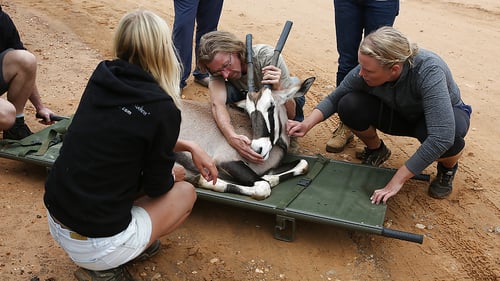
Providing intensive care for juvenile wildlife
Cheetah run observation and the education of cheetah physiology
Project work including building camps and new facilities, breaking down oldstructures, maintaining roads, fence work, assisting with the various projectsthat arise at the sanctuary and much more
Monitoring high-profile species on the reserve
Spoor tracking of reserve animals. Join skilled trackers to identify gameand carnivore numbers and learn the ins and outs of animal populations
Rhino Rangers “Lite”: This activity provides a taste of the freestanding“Rhino Rangers” program itself and includes: Tracking, overnightingin the bush, own food preparation and wildlife monitoring
Focused research:✓ monitoring free-roaming carnivores✓ analyzing camera traps✓ analyzing GPS data
✓ research on the Zannier Reserve by N/a’an ku sê
Game counts on horseback
Attending conflict calls (if they arise)
As a volunteer, you will be able to experience each of the various jobs on the farm; as the tasks are rotated among the volunteers to ensure each person has an opportunity to both help with farm maintenance and interact with the animals equally.
Average Working Day
Preparing food * and feeding the animals
Cleaning of enclosures
Providing enrichment ie. creating devices and objects that stimulate the animals' natural behaviour physically and mentally
Caring for juvenile wildlife
Physical labour such as building new facilities
Research including monitoring free-roaming carnivores, analysing camera traps and GPS data
Game counts in the bush
* While we require a lot of assistance with preparing meat for the animals, volunteers who do not feel comfortable with this task will not be forced to do so.
Working with animals requires flexibility, and while on weekends there are fewer tasks, the animals still need to be fed. Something out of the ordinary can also happen at night if it's for example your turn to look after the baby baboons. Please note the only animal interaction is with the baboons. On Saturday afternoons there will be a fun non-work related activity followed by a braai (barbeque). On Sundays you will be on food preparation duty either in the morning or in the afternoon, so you will have half the day off. All non-working hours are free time to explore the sanctuary!
Please note that from time to time there can be unavoidable changes to the project. These can be caused by weather, conservation priorities, materials supply, or because ongoing projects have progressed more quickly or slowly than originally planned. We ask you to accept the changes - we are sure that you will enjoy the replacement projects just as much.
Public Holidays
Public Holidays 2026
26 August
10, 25-26 December
Public Holidays 2027
01 January
21 - 22, 26 & 29 March
01, 04, 06, 25 & 28 May
26 August
10, 25-27 December
Inclusions
Accommodation
Three meals a day
24-hour support & supervision
Donation to the project
Certificate of appreciation
1 x green uniform sets (pants and shirts)
Mandatory Volunteer Requirements
Basic level of competency in English
Medium level of fitness
Completed application form
The most important things to bring are a sense of humour, patience, an open mind and a positive attitude!
Visa Info
You need to apply online for your 30 day visa before departure, this is called a Visa On Arrival on the online website.
Optional Extra Uniform Costs
The volunteers will each receive one shirt and a pair of pants, however if they need more they will need to purchase extra.
Uniform costs are as follows:
- Shirt N$230
- Trousers N$520
- Jacket N$570
Why not add on the Namibia Adventure Week?
What Makes a Good Volunteer?
Volunteering and intercultural travel share a common trait: the more you put into it, the more you get out of it. This program is designed for proactive individuals and groups that are prepared to adapt to the local environment and its current needs. Naturally, the scheduling and activities of our program are subject to change. Alterations in activities are mainly due to changes in local conditions, which we believe is part of what makes overseas programs the interesting adventure and incredible learning experience that they are.
How Long Should I Volunteer?
What’s included?
Accommodation
Bring warm clothes for sleeping during the winter months, it can get cold at night and there isn't heating in the tents.
Local transport
You will be met at Windhoek International Airport and taken to the project.
Departure
You will be taken to Windhoek International Airport to catch your departure flight. The departure time from the project is approximately between 11:00 and 13:00.
Meals
Additional info
Travel insurance is compulsory. You are also required to present a copy of your return flight itinerary when entering Namibia.
What to Bring
The type of clothing you should bring depends on the time of year. In any case bring old work clothes that you don't mind getting worn and dirty, you will be handling meat during food preperation. Proper boots or shoes with closed toes, as well as work gloves to protect your hands. If possible, please mark your clothing with your name prior to arrival. During working hours all volunteers need to wear the uniform tshirts
Internet Access
There is no WiFi at the project due to the poor reception so we suggest you purchase a Namibian SIM card and load data on it. You can purchase a SIM card at the airport upon arrival or once you get to the project.
Cashless transactions (card only) at Naankuse Wildlife Sanctuary:
As shared previously, we would like to remind you that a cashless system is in place at Naankuse Wildlife Sanctuary. All payments on site at our bar, coffeeshop, for transfer or additional activities can be made by card only.
ATMs
There is an ATM at the project, but it's not always functional due to signal problems. We therefore suggest that you get cash at the ATM at the airport upon arrival.
Shops/Grocery Stores
You can book a transfer to the city centre with your volunteer co-ordinator to purchase any essentials or additional food items at an additional cost of NAD250 per trip.
Winter in Namibia
May to September is the winter period and can be very cold at night and in the early mornings and daytime temperatures can vary. Please make sure to pack enough warm clothes if you plan your trip in that period. A sleeping bag is recommended! October to April is the summer period and the rainy season is from November-February. Whilst during this time it is generally hot during the day it can rain and become chilly in the evenings so do pack a jumper or fleece and waterproof jacket.